TheBrief · Learn With Me
Solar Power: The 2026 Global Solar Strategy
The 60 Second Read
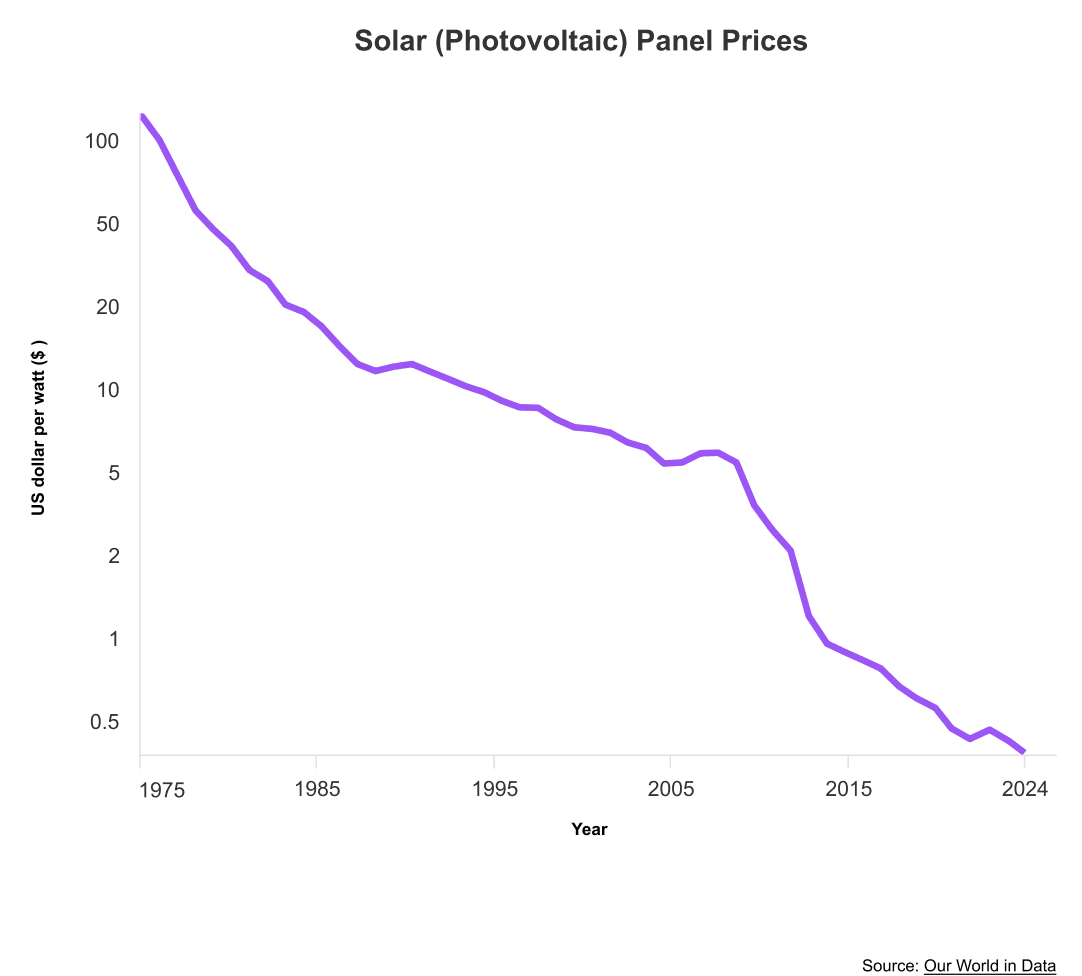
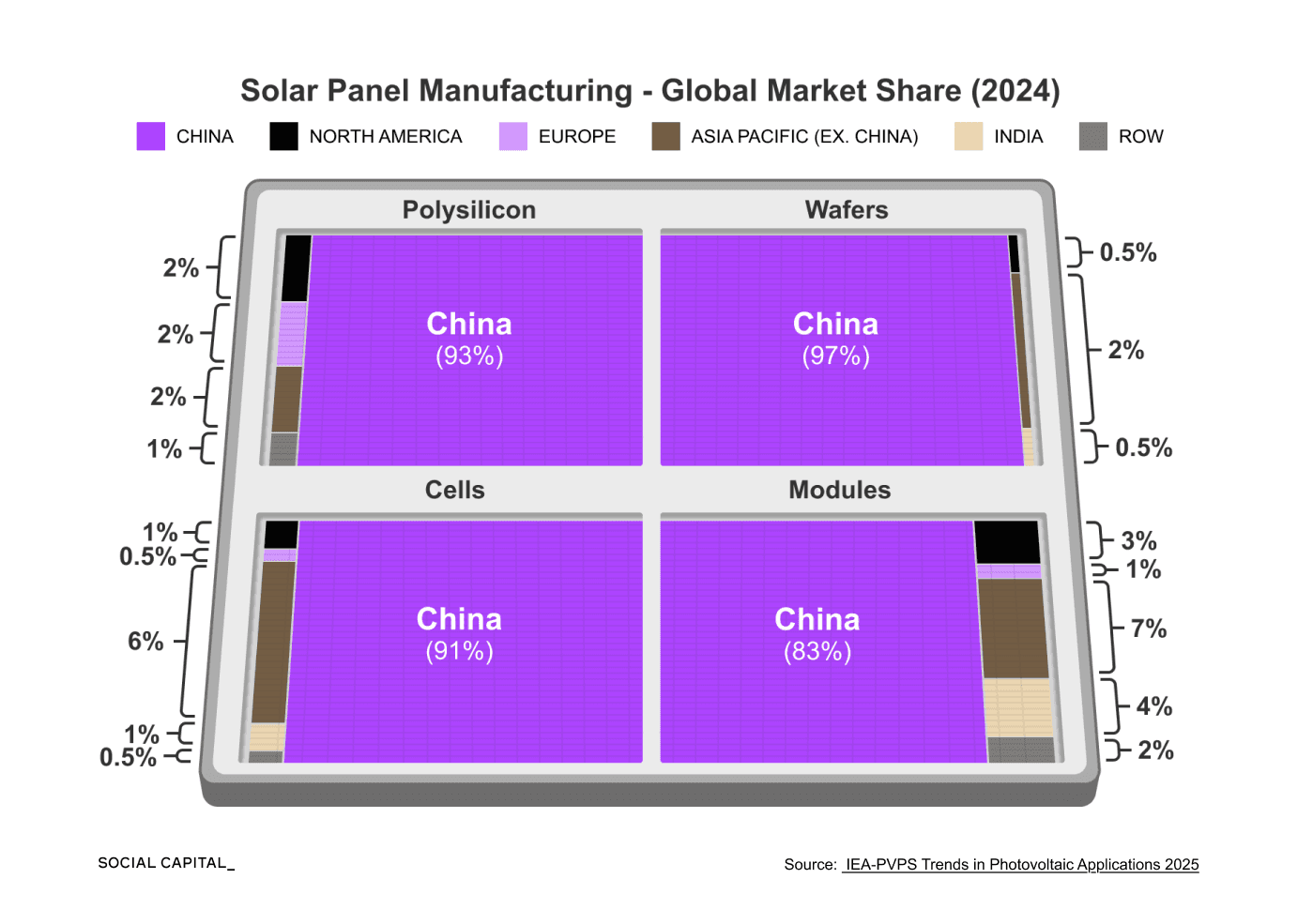
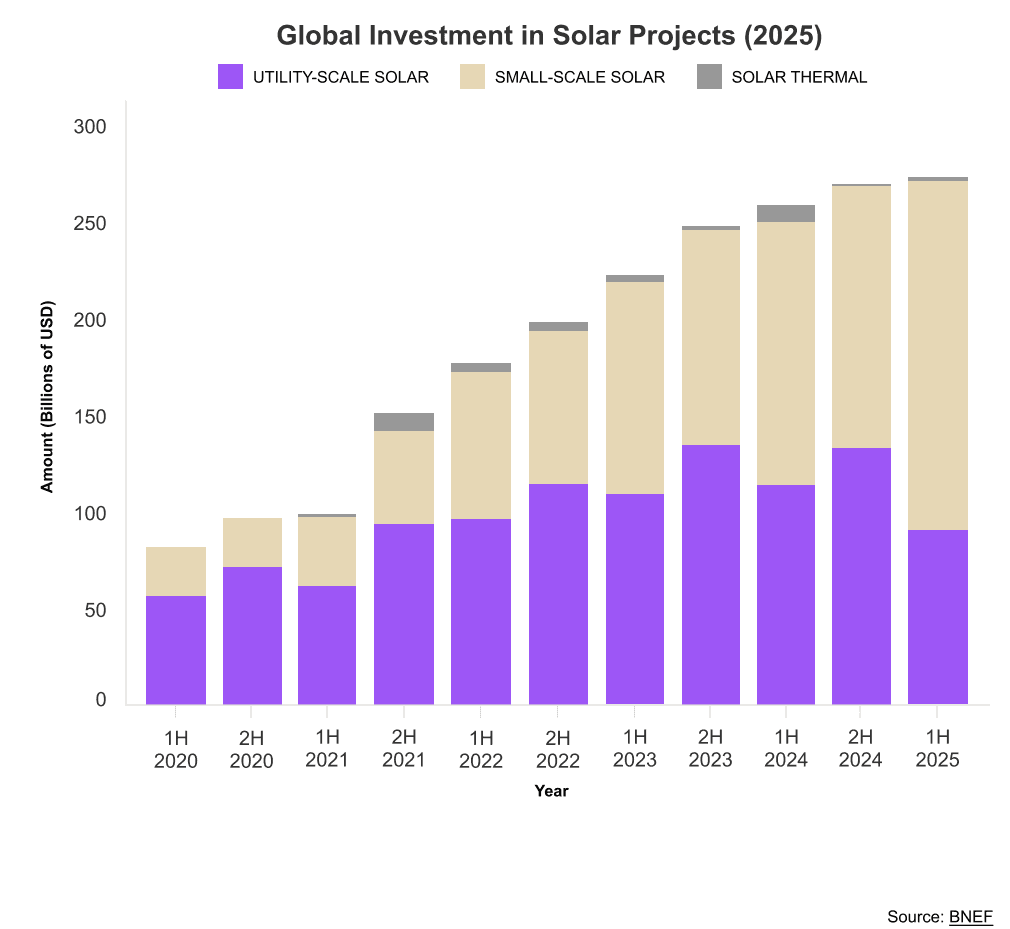
In 90 minutes, sunlight delivers more energy to Earth than humanity uses in a year. Abundance was never the problem. When Bell Labs built the first practical silicon solar cell in 1954, the technology was so expensive it made sense only on satellites. Since 1975, panel costs have fallen more than 99.9%, and in 2025 solar attracted $500B of investment, more than every other electricity source combined. This Deep Dive explains how a decades-old technology became the default source of new power, and why its next constraint has nothing to do with cost. The buildout ran through three eras: the United States invented the cell, Germany created the first large market with feed-in tariffs, and China industrialized it, cutting panel costs more than 90% and taking control of 80 to 97% of the supply chain from polysilicon to modules. Deployment followed policy rather than sunshine, which is why Germany holds more solar capacity than all of Africa combined. Now the binding constraint is timing. Solar peaks at noon, demand peaks in the evening, and batteries have shifted from add-on to requirement: solar plus storage made up 81% of new US electric capacity in 2025.
Key Takeaways
- Takeaway 01
The fastest ramp in energy history
The first terawatt of solar took about 20 years to install and the second took 3, with generation growing 20x in 11 years, a pace coal, gas, and hydro each needed more than four decades to match. In 2025, solar met over 80% of global electricity demand growth.
- Takeaway 02
A 99.9% cost collapse
Panel costs have fallen more than 99.9% since 1975. New solar now costs as little as $30 to $40 per MWh to build and operate against $50 to $150+ for coal and gas, while average cell efficiency rose from roughly 14% in 2000 to over 23% today.
- Takeaway 03
Policy trumps physics
The sun-rich Solar Belt should host the world's panels. Instead, Germany installed more solar than all of Africa combined, and the UK built gigawatt-scale capacity with far less sunlight than the Sahara. Feed-in tariffs, subsidies, and mandates decided where solar got built.
- Takeaway 04
China's dominance was planned
Four consecutive Five-Year Plans turned solar into state strategy. China controls 80 to 97% of the supply chain from polysilicon to modules, holds 47.6% of global installed capacity, and in 2024 added more capacity than the United States had installed in its entire history.
- Takeaway 05
Storage stopped being optional
Solar peaks at noon and demand peaks in the evening, so the grid loses power exactly when it needs it most. With battery costs near $100 per kWh after a 33% drop in 2024, solar plus storage made up 81% of new US electric capacity in 2025.
- Takeaway 06
The investment flip
In 2025, for the first time, distributed solar attracted more capital than utility-scale projects. Aggregated rooftops now behave like infrastructure: one California test dispatched 540 MW from 100,000 homes, more than a typical gas peaker plant, and data center operators signed over 40% of 2024's clean-energy power purchase agreements.
Why This Matters
Solar's binding constraint has moved twice, from physics to cost and from cost to integration. That is the operator's read: panels are commodities in oversupply, so the remaining scarcity sits in everything that connects cheap midday generation to evening demand. Batteries near $100 per kWh, transmission, interconnection queues, and the software that turns 100,000 rooftops into one dispatchable plant. Data centers already pay for speed to power over lowest cost, which makes bundled solar plus storage the fastest product in the market. The watch items carry dates: the US residential tax credit ended December 31, 2025, tilting rooftop economics toward leases; Japan plans to beam a kilowatt from orbit in 2026; China targets a megawatt-scale orbital prototype by 2030. The next Deep Dive in this series covers battery storage, which is where the capital has already voted.
Featured Charts & Graphs
Chamath’s Take
Chamath’s audio commentary on this Brief is coming soon.