TheBrief · Learn With Me
Autonomous Driving: The Economics of a World Without Drivers
The 60 Second Read
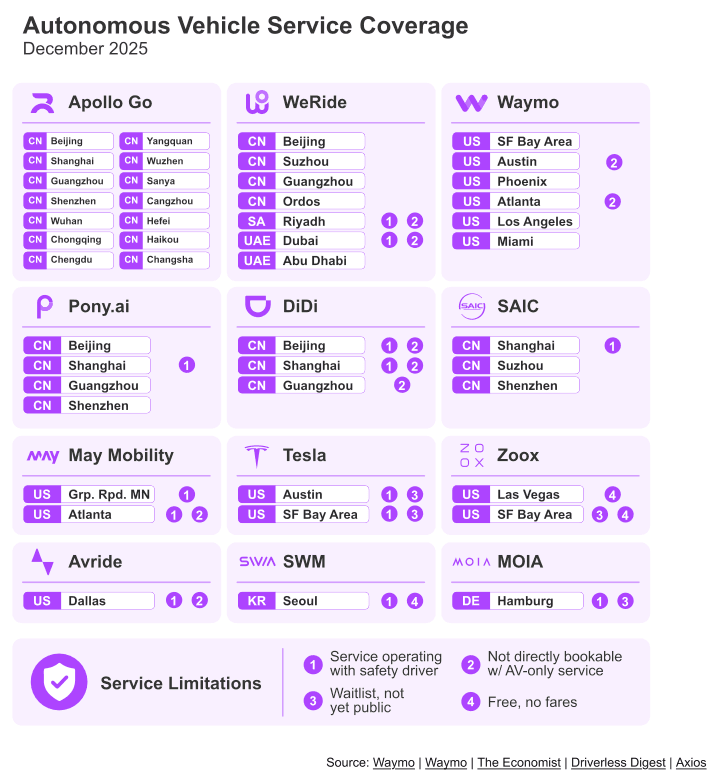
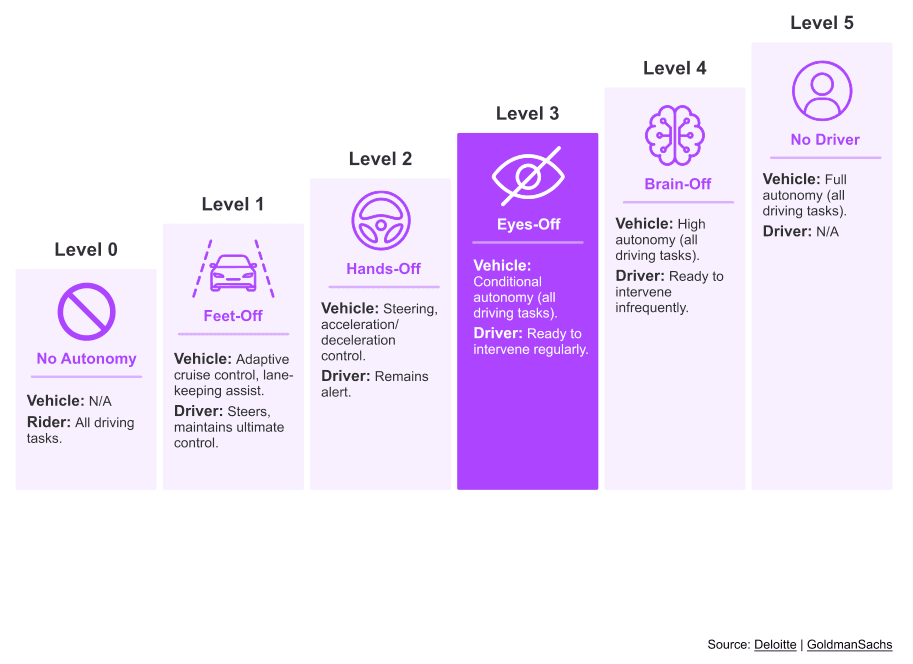
In 1995, a Carnegie Mellon car drove itself from Pittsburgh to San Diego, steering through 98% of the 2,850 miles. The last 2%, urban intersections, unpredictable pedestrians, bad weather, took thirty years to close. This Deep Dive explains what happens inside an autonomous car and what its arrival does to the price of moving people and goods. An autonomous car replicates the five things a human driver does unconsciously: sensing, perception, localization, planning, and control. The industry grades the result in six levels of autonomy, and Level 4, no driver within a defined zone, is where the commercial race is being won today. 2025 was the inflection point: autonomous ride-hailing now operates in 28 cities across six countries, and Waymo passed 20M paid driverless rides while recording 92% fewer crashes causing serious or fatal injuries than human drivers across 170M driverless miles. The economics explain the stakes. Adjusted for inflation, a mile in a personally owned car has cost about $1.10 since 1934. Autonomy is projected to cut that to $0.25 by 2035, and ARK sizes the robotaxi market at $11T by 2030 if the price floor holds. Ninety years of flat pricing is what this race breaks.
Key Takeaways
- Takeaway 01
Driverless went commercial in 2025
By December 2025, autonomous ride-hailing operated in 28 cities across six countries. Waymo passed 20M cumulative paid rides by the end of 2025, serves 500,000+ rides a week across 10 US cities as of March 2026, and overtook Lyft in San Francisco gross bookings within three years of operation.
- Takeaway 02
Safety is the strongest argument
Across 170M driverless miles, Waymo records 92% fewer crashes causing serious or fatal injuries than human drivers. The US loses more than 36,000 people on its roads every year, disproportionately to impaired and inexperienced drivers, the failure modes machines do not have.
- Takeaway 03
Tesla's bet is eight cameras
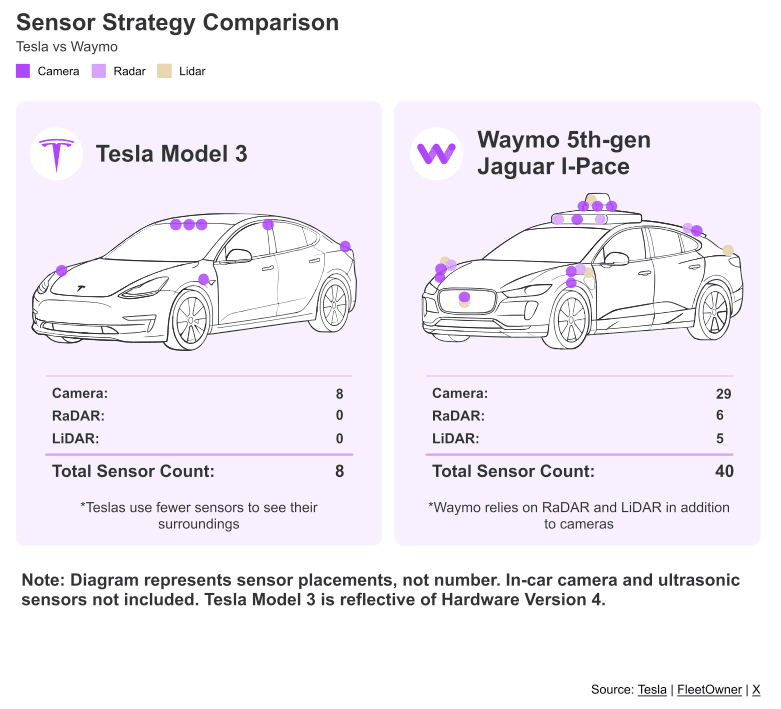
A Waymo carries 40 sensors, cameras, radar, and lidar, and the vehicle costs $75,000 to $120,000, while a Tesla carries 8 cameras and costs roughly $25,000. The cost advantage holds only if software can compensate for everything the missing sensors would have caught, and that is the bet Tesla's entire architecture depends on.
- Takeaway 04
The first break in a 90-year price
Adjusted for inflation, a mile in a personally owned car has cost about $1.10 since 1934. Autonomy is projected to cut that to $0.25 by 2035, a 77% drop, and ARK's $11T by 2030 market estimate holds only if cost per mile falls near that level.
- Takeaway 05
Cost and regulation gate the race
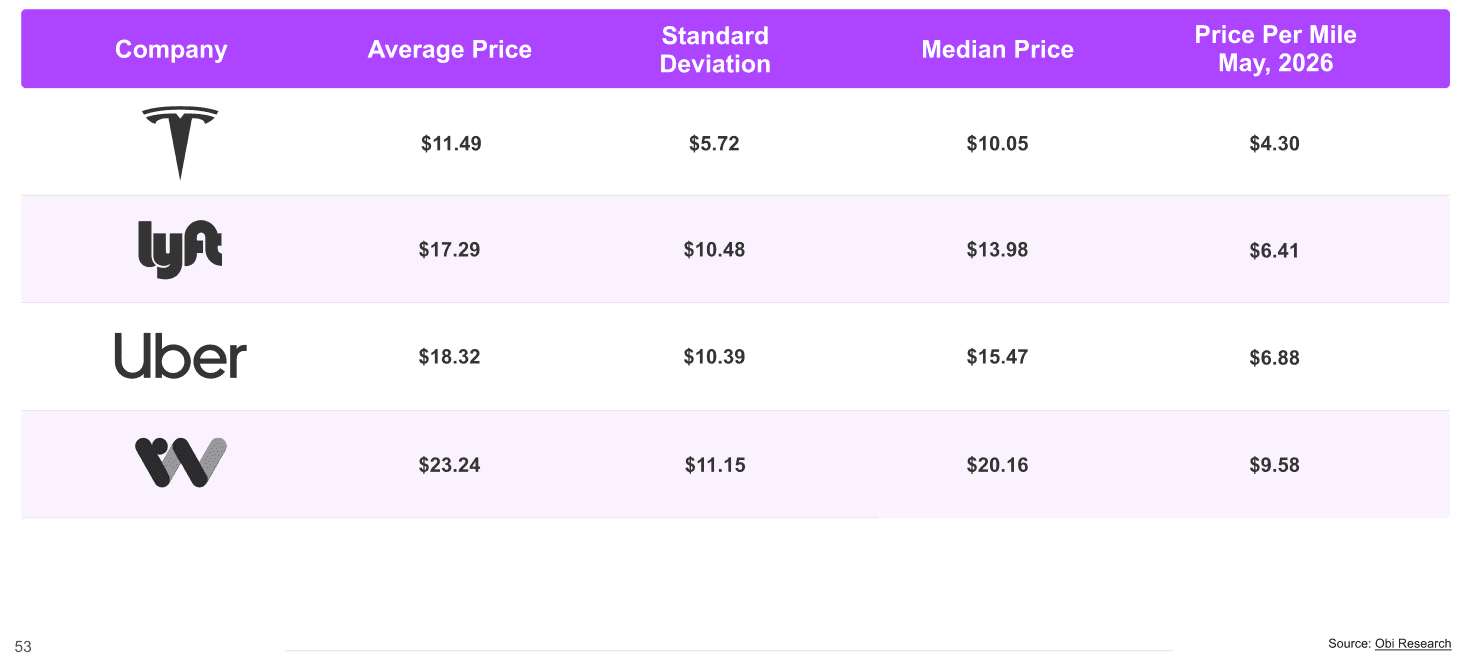
A robotaxi still costs about $120,000 to build; Goldman Sachs expects that to fall near $50,000 by 2030. The hardware shows up in the fare: in San Francisco, Waymo charges $9.58 per mile against Tesla's $4.30. With no national rulebook, deployment runs state by state: 25 states so far permit some level of it.
- Takeaway 06
The disruption reaches past the ride
Labor is 45% of per-mile trucking costs, and Aurora already runs 1,000-mile driverless freight routes. Early tests show sidewalk robots cutting last-mile delivery costs 83%. And about $318B in auto insurance premiums and roughly $31.72B in motor-vehicle injury litigation are priced on how humans drive; as liability shifts to manufacturers, both models break.
Why This Matters
Autonomous driving has cleared its technical bar: on Waymo's published data the cars are already safer than human drivers, and on ARK's projection far cheaper by 2035. The unsettled questions are economic and regulatory. The screen to apply is per-mile cost: whether build cost, fares, and utilization close the gap without subsidy. Tesla's $25,000 camera-only architecture and Waymo's sensor stack at up to $120,000 are opposite answers to that question, and San Francisco's fare table, $4.30 against $9.58 per mile, is the live scoreboard. The milestones carry dates: Goldman Sachs expects build costs near $50,000 by 2030 and 65% of US car sales autonomous by 2040; Aurora plans 200+ driverless trucks by the end of 2026 and thousands by the end of 2027; point-to-point autonomous trucking is projected for 2040. Watch the price of a mile, not the demos.
Featured Charts & Graphs
Chamath’s Take
Chamath’s audio commentary on this Brief is coming soon.